PALM: a tuneable, low-stress aerosol platform
A handheld inhaler that tunes aerosols on demand and delivers biologics without damaging them.
The problem
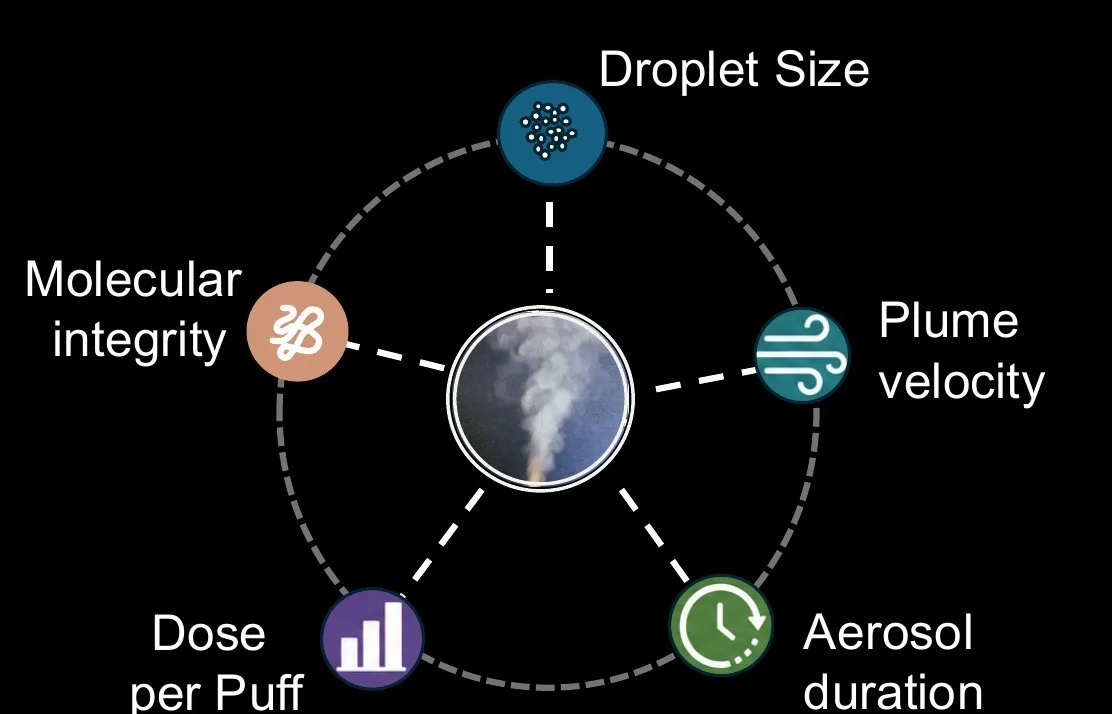
Delivering a drug to the lungs means balancing several parameters at once: droplet size, plume velocity, aerosol duration, dose per puff and the integrity of the molecule itself. Conventional inhalers fix most of these at the design stage, and the nozzles, meshes and jets they rely on apply high shear that can damage proteins, nucleic acids and other large molecules. As more therapies move to biologics, this is a growing limitation.
How it works
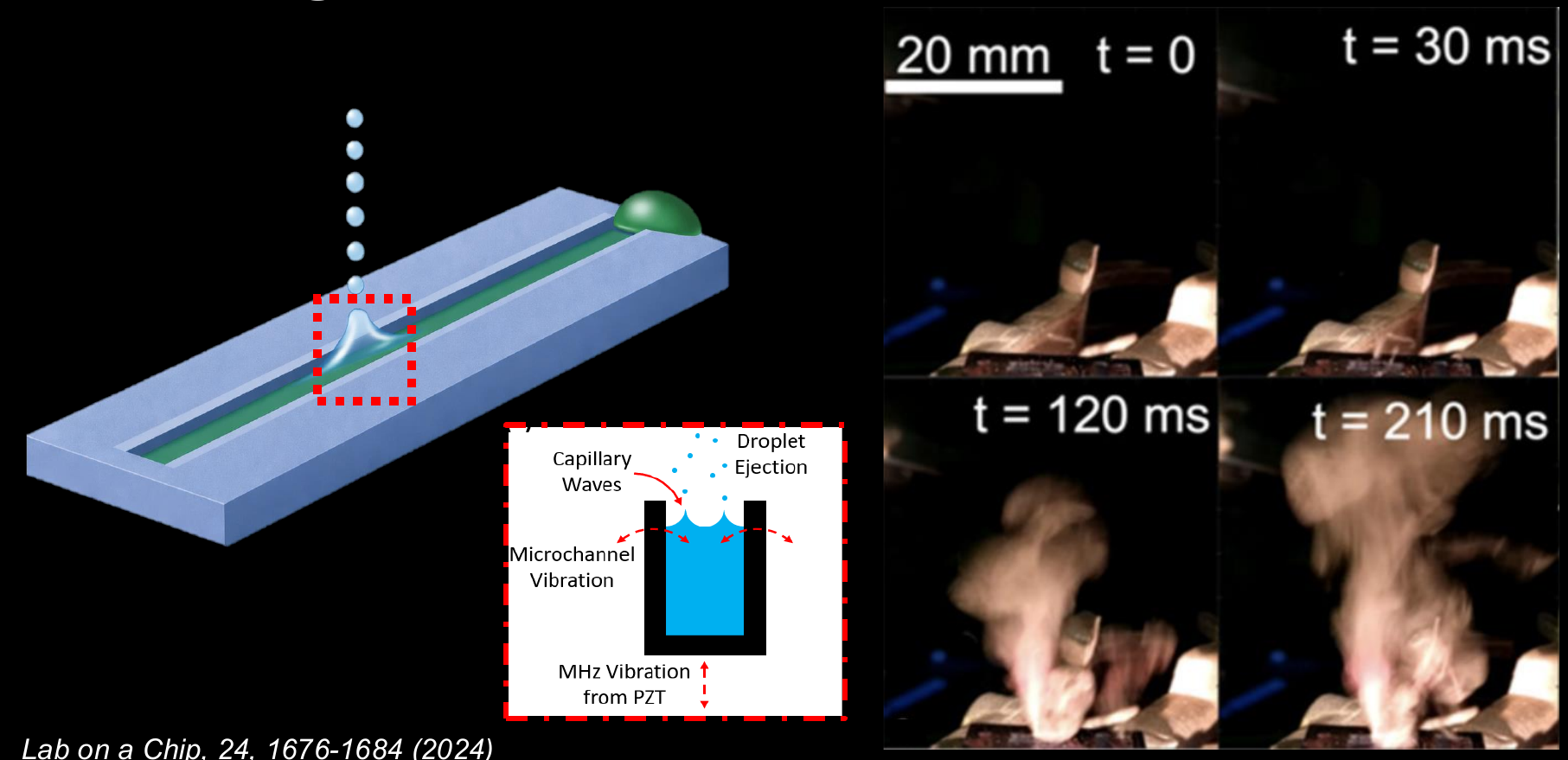
PALM generates aerosols from oscillating microchannels. A piezoelectric element drives the channel walls at MHz frequencies, creating capillary waves on the liquid surface that break up into fine droplets. There is no nozzle or mesh to clog, and the chip draws liquid directly from an attached reservoir, so it can be connected to different chambers and cartridge formats.
What it can do
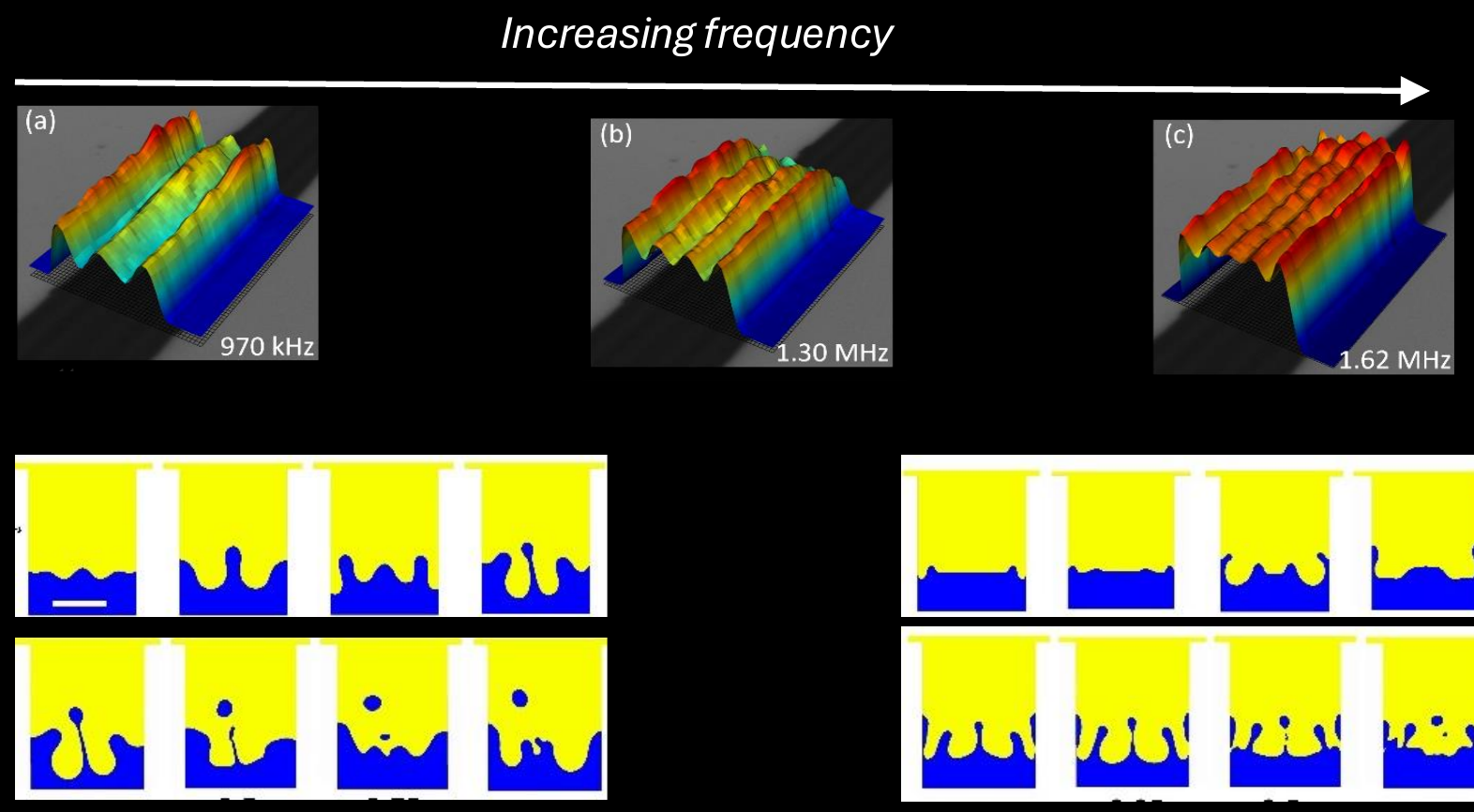
Tuneable droplet size. Droplet size is set by the actuation frequency and can be dialled on demand to target different regions of the airway, from the deep lung to the nasal cavity.
Tuneable plume velocity and duration. Plume velocity is set by actuation strength, and aerosol duration and dose per puff by electronic control, independently of droplet size.
High respirable fraction. > 90% fine particle fraction (FPF).
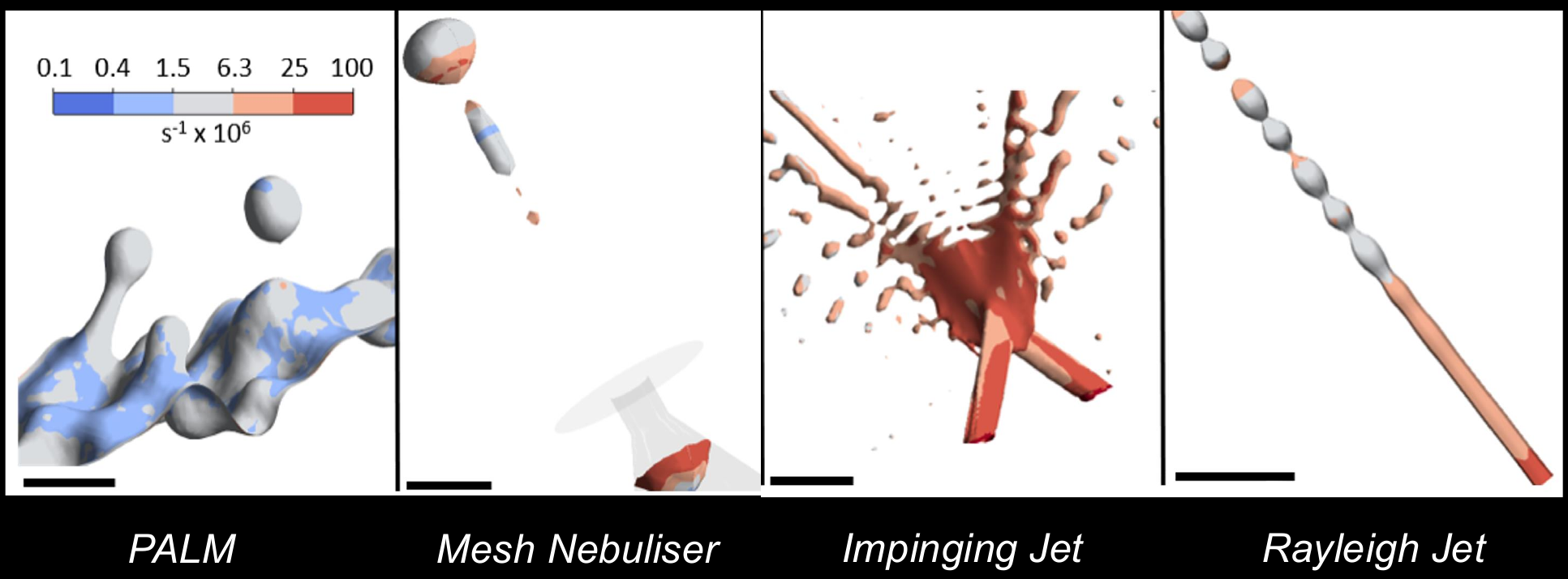
Low stress on the molecule. Simulations show lower strain rates during droplet formation than in mesh nebulisers or jet-based devices. In tests with Monash Health, PALM preserved the activity of representative biologics, including proteins and bacteriophages.
A handheld platform
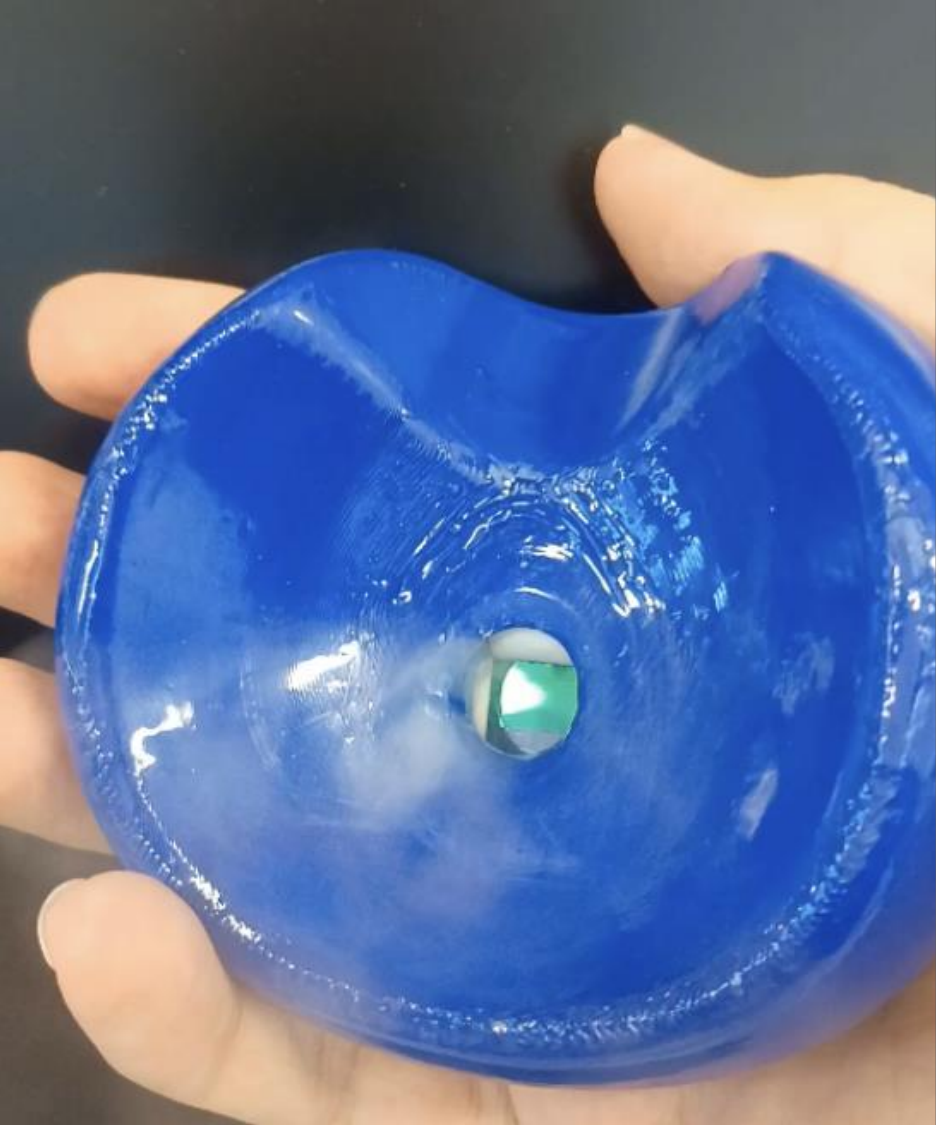
PALM has been integrated into a fully handheld device with electronic dose control, designed for scalable, low-cost manufacture and ready for evaluation with partners' formulations.
Status
Patents granted in the United States and Australia, and a European patent granted and validated in several jurisdictions, with further applications filed.
Good Design Award 2023 (Design Research: Best in Class and Gold); Designers Australia Award 2023.
Supported by an NHMRC Development Grant, Australia's Economic Accelerator and the Monash Institute of Medical Engineering, with fabrication at the Melbourne Centre for Nanofabrication.
We are working with pharmaceutical, biotechnology and device partners to take PALM towards clinical use. To discuss an evaluation with your formulation, see Work with us or contact tuncay.alan@monash.edu.
Key publications
Le, N. H. A.; Brenker, J.; Shenoda, A.; Sheikh, Z.; Gum, J.; Ong, H. X.; Traini, D.; Alan, T., Oscillating high aspect ratio micro-channels can effectively atomize liquids into uniform aerosol droplets and dial their size on-demand. Lab on a Chip 2024, 24 (6), 1676–1684.
Shenoda, A.; Brenker, J.; Alan, T., High-precision ultrasonic atomization using oscillating microchannels: interplay of three-dimensional vibrational modes and droplet ejection mechanisms. Physics of Fluids 2024, 36 (9), 092025.
Shenoda, A.; Brenker, J.; Alan, T., Acoustically enhanced capillary pumping: bulk acoustic wave-driven microchannel oscillations for rapid fluid transport. Physics of Fluids 2025, 37 (5), 052014.